


A plastic spoon's worth of tiny fragments, quietly accumulating inside the human brain. That image is no longer science fiction....
Minibrains Reveal Personalized Paths for Rett Syndrome
 Neuroscientists used 3D “minibrains” to discover that different Rett syndrome mutations cause distinct brain abnormalities. The study reveals that personalized treatments, tailored to specific genetic mutations, are necessary for the disorder.
Right-to-Left Brain Circuit Essential for Navigation
 Researchers have discovered a neural circuit connecting the right and left hippocampus that is vital for spatial memory. The study also links the disruption of this “bridge” to schizophrenia-related cognitive deficits.
Businesses need biometric orchestration to handle AI fraud, system complexity: Aware

The need for biometric orchestration is nearly universal among businesses using biometrics as they attempt to mitigate the surge in AI-driven fraud, according to a new survey from Aware.
The company’s 24-page report on “The State of Biometric Security in the Age of AI Fraud” shows 98 percent of businesses aligned on that necessity. They are motivated by the frequency of AI-driven fraud attacks, with nearly 50 percent experiencing them within the past year and nearly 90 percent concerned about such attacks targeting their biometric systems. More than half say they lost revenue due to fraud incidents involving AI, including deepfakes, synthetic identities and biometric injection attacks. Nearly as many see such attacks causing damage to their brand and reputation.
Aware surveyed 500 leaders at companies with 50 or more employees using biometrics in the U.S., UK and Brazil to compile the results.
Three-quarters of those surveyed already use biometrics or liveness detection in their fraud prevention strategies, including over 60 percent who use biometrics specifically to prevent identity fraud.
Businesses need to orchestrate these biometrics due to system complexity, which in turn is illustrated by the average use of three biometrics vendors by each business. Nearly 40 percent have multiple biometrics vendors, and nearly 40 percent have either 4 or 5.
More than half annually spend between $138,000 and $688,000 on biometrics to combat fraud, but more than a third spend between $688,000 and $1.4 million per year.
“Organizations are no longer asking if they need biometrics — they’re already managing complex ecosystems and asking how to make them work together,” says Ajay Amlani, CEO of Aware. “Biometric orchestration is emerging as the critical layer that helps security teams stay ahead of AI-driven threats while maintaining performance, accuracy, and user experience. It turns complexity into an advantage by enabling smarter, faster identity decisions.”
Regulatory compliance is another motivating factor, with more than 95 percent seeing a benefit to using biometrics in that area. The second most commonly-seen benefit of biometrics adoption is not preventing fraudulent account creation (58.6 percent), but reducing employee login and MFA fraud (64 percent).
“Deepfakes and AI-powered attacks are fundamentally changing how identity can be manipulated,” says Maxine Most, CEO of The Prism Project, in the company announcement. “To keep pace, organizations must rethink how identity is secured and invest in intelligent systems. Biometric orchestration is a critical layer that brings those systems together into a cohesive, effective defense.”
The Prism Project hosted the Deepfake Summit last month to convene stakeholder in biometrics, digital identity security and deepfake protection.
The report also highlights the importance of independent technology validation, quoting BixeLab CEO Ted Dunstone on the topic. Aware passed a Level 3 biometric liveness detection evaluation by BixeLab in February.
Forensic Linguists Map the Language of Corruption
 Forensic linguists have decoded the Enron “trust playbook.” Using the world’s largest collection of criminal recordings, researchers identified five specific tactics used to manipulate collaborators into committing fraud.
U.S. House lawmakers move to codify DHS biometric screening abroad
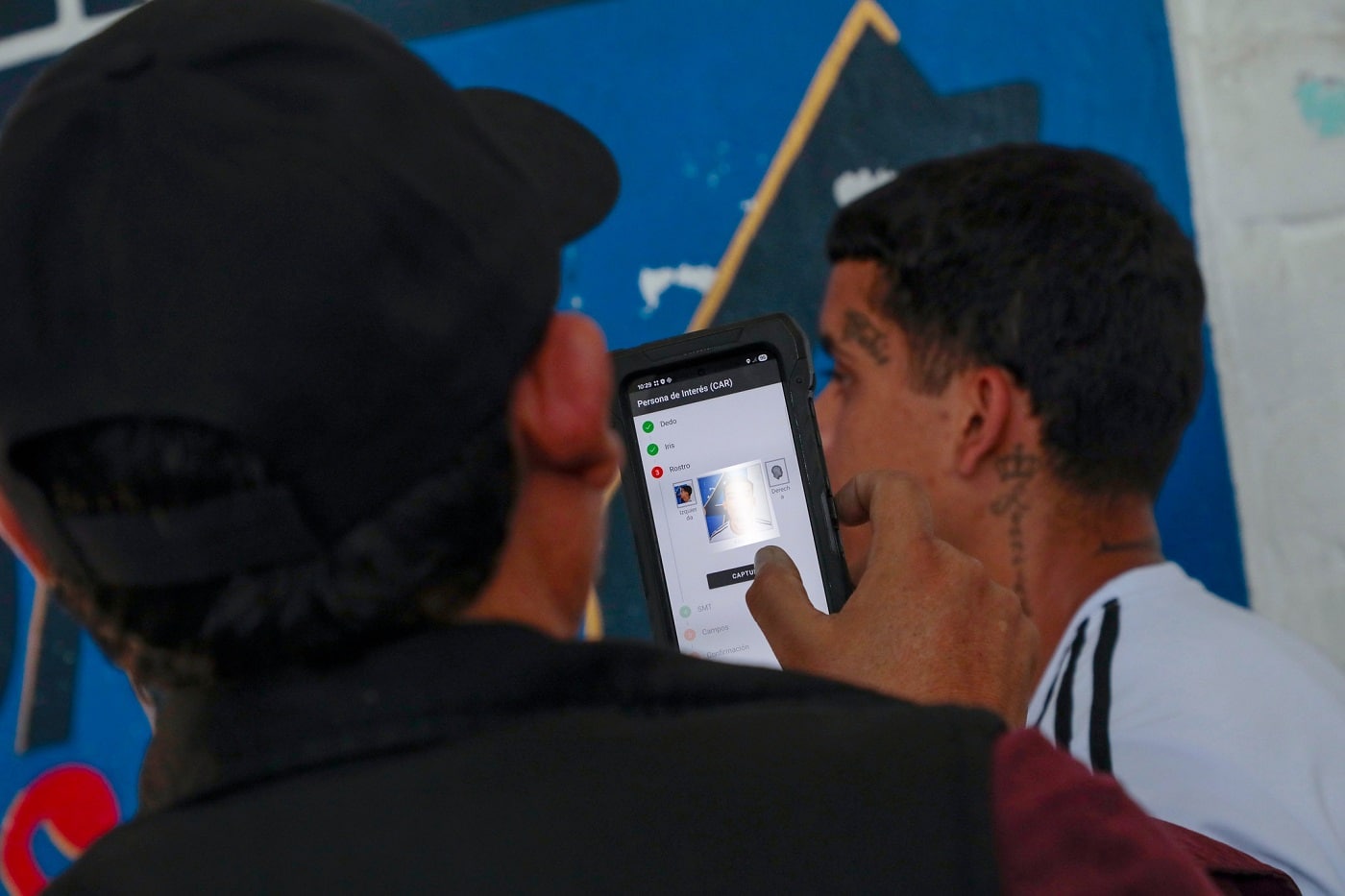
U.S. Reps. Michael McCaul and Henry Cuellar, both from Texas, reintroduced the BITMAP Authorization Act, a bipartisan bill that would formally establish the Biometric Identification Transnational Migration Alert Program (BITMAP) within the Department of Homeland Security (DHS).
The measure is designed to “push the border outward” by helping foreign partners identify high-risk travelers before they ever reach a U.S. port of entry, a goal McCaul framed as a way to stop traffickers, terrorists, and transnational gang members who may attempt to conceal their identities while moving along illicit migration routes.
Established in 2011, BITMAP is a Department of Homeland Security/ Immigration and Customs Enforcement (ICE) initiative that trains foreign partners to collect biometric and biographic data from special interest aliens, criminals, and known/suspected terrorists at foreign borders. It aims to identify and track threats before they reach the U.S. border.
HSI agents train foreign law enforcement partners to collect biometric data which is then uploaded into U.S. systems.
“Bad actors like traffickers, terrorists, and transnational gang members may lie about their identity in an attempt to enter our country undetected, but they can’t fake biometrics,” McCaul said in a statement. “The successful BITMAP program empowers our regional partners to identify and stop these individuals long before they reach our borders.”
The bill does more than simply “authorize” BITMAP. It would amend the Homeland Security Act of 2002 to formally create a new Section 448 establishing the program inside DHS, with Immigration and Customs Enforcement (ICE) specifically named as the operational lead, acting in consultation with the State Department and the Director of National Intelligence to facilitate the voluntary sharing of biometric and biographic information collected from foreign nationals.
In practical terms, the legislation would authorize DHS to provide partner countries with equipment, training, and operational support so they can collect biometric and biographic data from people moving through illegal travel pathways.
It would also let those partner governments compare that information against a range of U.S. databases, including DHS’s Automated Biometric Identification System system (IDENT) or its successor, the Federal Bureau of Investigation’s (FBI) Terrorist Screening Database, the FBI’s Next Generation Identification database, the Defense Department’s Automated Biometric Identification System, and any other relevant systems designated by DHS in consultation with other federal agencies.
That framework shows that the bill is not just about collecting more data, but about connecting foreign screening operations directly to the U.S. government’s existing counterterrorism, immigration, and law enforcement watchlisting architecture.
In 2018, when McCaul first introduced legislation to permanently authorize BITMAP, the American Civil Liberties Union, Immigrant Legal Resource Center, National Immigration Law Center, and the National Immigration Project of the National Lawyers Guild opposed the effort.
“The House should not permanently authorize the BITMAP program with limited information, no information on whether DHS takes any steps to protect privacy, no studies regarding its efficacy, and no statutory privacy or transparency protections,” the groups said.
“This bill raises significant concerns regarding the sharing of information across foreign governments related to suspicion of terrorism, gang violence, and other so-called national security concerns with very little information as to how this information is used and retained,” the groups added.
The legislation also tries to put more structure around how BITMAP expands internationally. Before launching operations in a new foreign country, DHS would have to enter into an agreement or arrangement with that government in which it lays out the program’s goals, the training and best practices to be used, and the scope of operations in that country.
Within 60 days of such an agreement taking effect, the department would have to provide Congress with a copy and identify the partner country and the goals of the operation, a requirement that addresses Cuellar’s concern about the need for stronger congressional oversight of partner agreements and program outcomes.
Oversight is a major feature of the bill. Within 180 days of BITMAP being formally established, and annually for the next five years, DHS would have to submit reports to the House and Senate homeland security committees detailing strategic goals, operational plans, partner-country progress, budget information, staffing and equipment support, enrollment numbers, training provided, the redress process, and the program’s effectiveness.
DHS would have to report not just on strategy and effectiveness, but also budget sources, anticipated expenditures, personnel, equipment, infrastructure support by country, enrollment numbers, training guidance, and the redress process.
Congress would also get briefings on how many BITMAP-enrolled individuals were later apprehended at the border or in the U.S. interior, and how many filed asylum claims.
In addition, the Government Accountability Office would have to conduct an audit within six months of enactment and every three years thereafter.
The bill includes a privacy-related provision directed at U.S. citizens. It says the secretary of homeland security must ensure that any biometric or biographic data of U.S. citizens captured through BITMAP operations is expunged from all databases to which it was uploaded, unless the information is being retained for specific law enforcement or intelligence purposes.
When civil rights group opposed the similar 2018 legislation, they said the “program includes the sharing of extraordinarily sensitive information regarding individuals without warrant or analogous legal process … the legislation fails to include any privacy standards that DHS must follow with regards to the program,” like “what information can be collected, how long can it be stored, when can it be disseminated to other agencies, and can it be shared with foreign partners?”
The bill also includes a six-year sunset, meaning Congress would have to revisit the authority rather than allow it to continue indefinitely without review.
Politically, the proposal fits into a broader border security strategy that emphasizes intercepting potential threats well beyond U.S. territory by relying on foreign governments as early screening partners.
McCaul’s office previously described BITMAP in similar terms, saying it helps the United States work with international partners to identify bad actors before they reach the border.
In announcing their bill, McCaul and Cuellar made clear that the current bill is a reintroduction rather than a wholly new concept, suggesting lawmakers are again trying to convert an existing DHS operational program into a permanent, congressionally authorized part of the homeland security apparatus.
Gabon institutes social media age verification for Under-16s

Gabon has gazetted a new regulation that requires anyone accessing social media platforms and digital media content in the country to undergo an age verification process before they can get the greenlight. This makes it the first African nation to adopt age assurance for social media, which is a growing trend around the world.
The objective of the move is to prevent those who are below the age of 16 from accessing online content such as pornography that is deemed harmful for their social and moral upbringing. Gabon suspended social media in February over concerns about the spread of false information.
Per the ordinance that was signed by President Brice Clotaire Oligui Nguema on February 26, the country’s High Authority for Communication (HAC) has been handed the role of overseeing compliance with these prescriptions.
Gabon’s Gulf of Guinea neighbor Nigeria has launched a public survey to get feedback on proposed age checks for social media.
Age verification technical framework
The HAC is required to establish and publish a technical reference framework that will set minimum requirements for age verification systems, which will cover both the reliability of age checks and respect for the privacy of users who access these online platforms.
The age verification checks, according to the regulation, will entail verifying a person’s biographical and address information, and, where applicable, their digital identity as registered with Gabonese administrative authorities, including their Personal Identification Number.
Also, digital content platforms will be obliged to submit to mandatory technical audits conducted by the HAC or any other accredited independent body, to verify that their age verification systems meet the required technical standards set by the regulation in force.
The ordinance allows for a period of 12 months for the concerned platforms to transition to the new dispensation, meaning full compliance is expected by February 2027.
Within this period, they’ll be expected to put in place effective age verification mechanisms, deploy automatic detection tools for AI-generated content, clearly label such content from the beginning, and then be ready to transmit metadata from AI-generated content to the HAC within a deadline of eight days in the event of a judicial or administrative probe.
The regulation, which also addresses issues related to AI-assisted identity theft, applies to any user, editor, or host of social networks and digital platforms whose content is accessible or produces effects on Gabonese territory. It also covers any online offer of goods or communication services, whether free or paid.
Penalties for defaulters at all levels include prison terms of up to 10 years, and fines that range from approximately US$3,260 to $81,500.
Policy for bolder digital transformation
The social media and digital content regulation in Gabon comes at a time when the country is pursuing its digital transformation agenda.
Speaking last month to TechAfrica News on the sidelines of the Mobile World Congress (MWC) in Barcelona, the Minister of Digital Economy and Innovation, Mark-Alexandre Doumba, said the government is fully engaged in putting in place robust digital policy frameworks.
He added that they are also working to build connectivity infrastructure and expanding their digital ID system. “We’re very focused on making sure that every Gabonese has a digital ID to be able to log in and connect to government portals and be able to access government services from the convenience of their smartphone.”
Gabon’s digital ID has been positioned as the central pillar of the country’s digital transformation.
Early this year, the government signed a partnership deal with U.S. firm Cybastion to speed up the development of digital public infrastructure.
The investment agreement concluded in January will see the company provide funding for the construction of a data center, enhance cybersecurity, and expand access to advanced digital solutions in the country, including digital ID.


