


Vision Rescued: How Stem Cells “Rehabilitate” the Dying Eye

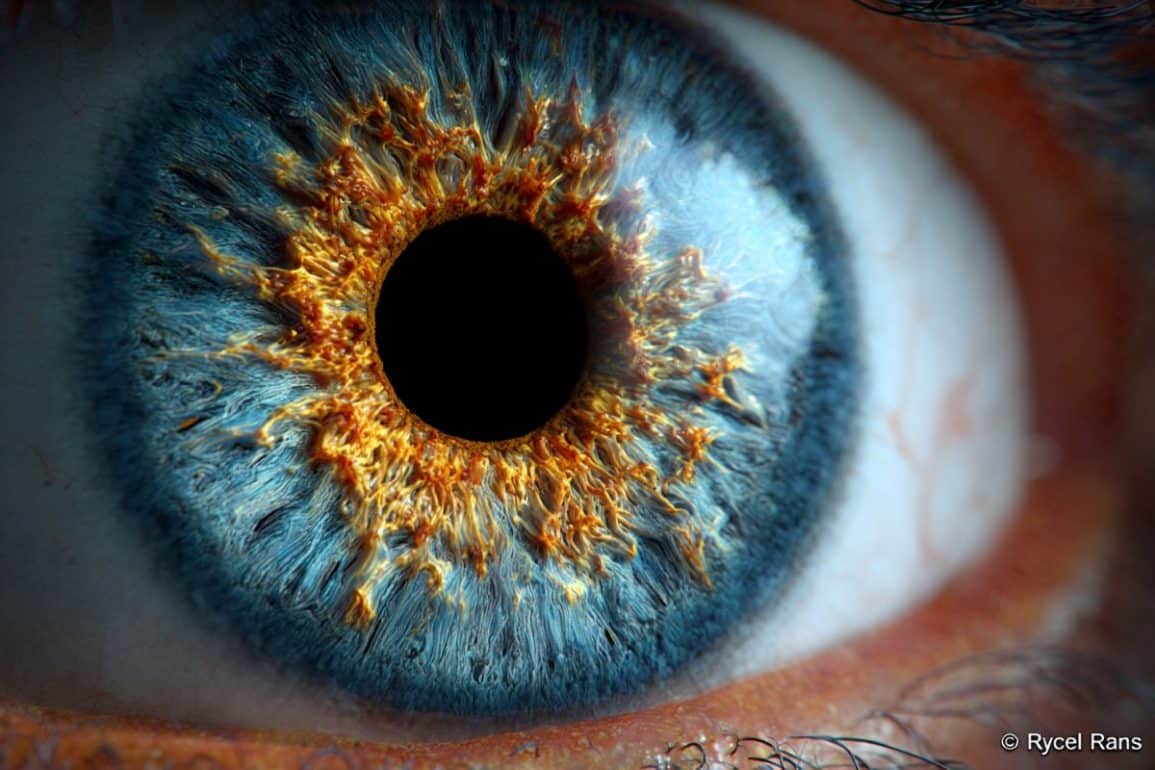 New research reveals that transplanted stem cells act as a dynamic repair crew, preserving vision for the equivalent of 20 human years.
California’s OS-based age verification law challenges open-source community


California’s new online safety bill, AB 1043 (the Digital Age Assurance Act), adopts a declared age model for operating systems. Under the law, which is set to take effect on January 1, 2027, when a user sets up a new device, the operating system is required to ask for their age or date of birth. This declared age will be used to curate what’s available on the app store, and can be shared with developers on request to ensure age-appropriate experiences.
An article in PC Gamer points out that this “sounds incompatible with many of today’s open source software, including Linux.” The open source community is wrestling with the problem of how to comply with the laws while also not violating core privacy principles.
The piece muses on technical solutions, quoting Jef Spaleta, project leader for popular Linux distribution, The Fedora Project, who says “this might be as simple as extending how we currently map uid to usernames and group membership and having a new file in /etc/ that keeps up with age.”
Or, “it might be as simple as that and we extend the administrative cli and gui tools to populate that file as part of account creation. That might be simplest and it solves the problem for the full ecosystem of Linux OSes. Then applications just have to start choosing to look at the file.” To Spaleta, this suggests a D-Bus Service, which allows communication between programs.
Ubuntu, another Linux distribution, is also unsure of how to respond, and says it is consulting with its lawyers before making a plan.
California age law does not compute with DB48X
The point is, in putting the onus on operating systems to collect age data, AB 1043 is causing headaches for open source nerds. Both California’s bill and a like-minded bill in Colorado, SB26-051, have drawn the ire of the creators of an open source calculator, DB48X, described as “a project to rebuild and improve upon the ‘legendary’ HP48 family of calculators and RPL programming language, and for modding newer calculators to utilise it.”
Rather than comply, DB48X has opted to restrict access for Californians and Coloradans when (and, in Colorado’s case, if) their laws come into effect. A legal-notice file for the project says “DB48X is probably an operating system under these laws. However, it does not, cannot and will not implement age verification.”
Per PC Gamer, “you know you’ve messed up when you’ve angered the math lot.”
The calculator guys are not alone. Ground News has a roundup of articles expressing variations of grievance. WebProNews says California’s law “forces a surveillance mandate on every developer – including those who can’t comply.” The Daily Economy says “California is embedding age verification directly into digital devices. For those of us concerned with personal liberties, this is an emergency.”
No verification required, actually
PC Gamer also notes the challenges of enforcing a law that means “the job of checking whether people have installed its OS falls onto Californian authorities to deal with.”
“Both Californian and Coloradan bills set out civil fines of $2,500 for unintentional breaches and $7,500 for intentional breaches, but how would the majority of breaches be discovered in the first place?”
Another criticism asks why California does not specify what level or extent of age verification it requires. If it’s just a date of birth, Spaleta says, “a simple dropdown interface may suffice,” meaning “the effectiveness of such a system appears to be based on an honour system.” Self-declaration at the root negates the entire process; this would-be age verification law, in fact, does not mandate age verification at all. Technically, it’s not even age assurance.
California’s law is less than a year away from taking effect, and Colorado’s bill (which more properly labels its goal “age attestation”), if passed, would take effect January 1, 2028. Ironically, the piece ends up lamenting the speed at which new technology is becoming normalized: the laws, it says, are “coming at a time when age verification is being rolled out more widely across the globe and facing stern criticism, such as an open letter from scientists and researchers that notes the many pitfalls of ill-thought-out verification methods.”
The letter in question has provided a common reference for those opposed to age assurance laws and technologies for various reasons. The open source community now joins social media tycoons, privacy advocates and pornographers in opposing such laws, which they say are invasive and dangerous – but which lawmakers insist parents are asking for, as they work to find the right legal model.
The Trump administration says it can’t process tariff refunds because of computer problems

The US Customs and Border Protection says it currently can’t comply with an order to process billions of dollars in refunds stemming from tariffs imposed by President Donald Trump. In a filing on Friday, CBP executive director Brandon Lord says the agency’s digital import processing system is “not well suited to a task of this […]
New York City lawmakers push sweeping restrictions on private sector biometric surveillance

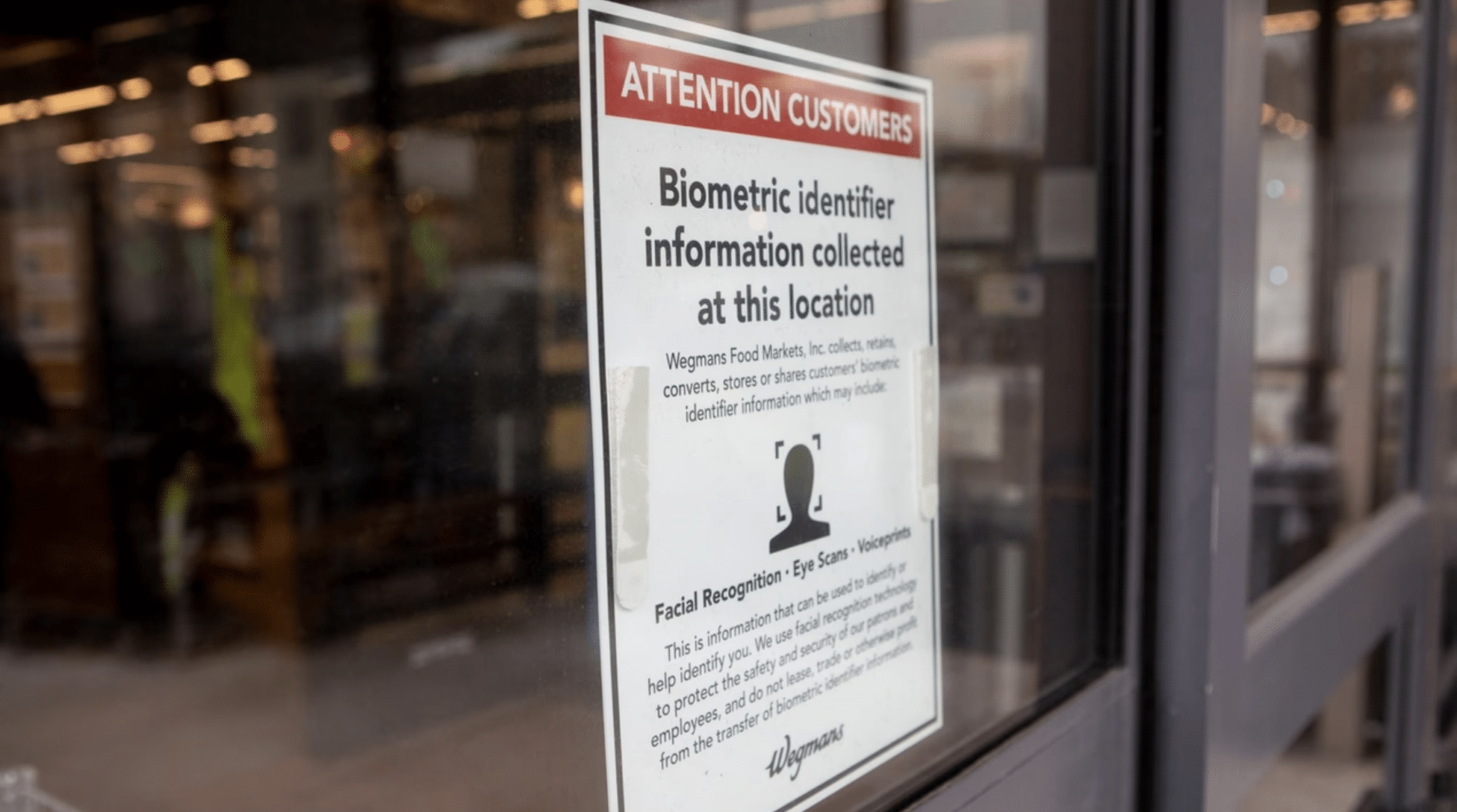
New York City lawmakers are weighing a sweeping new attempt to curb the spread of biometric surveillance in everyday life, advancing legislation that would sharply restrict the ability of businesses and landlords to collect facial scans, voiceprints, fingerprints, and other uniquely identifying data from the public.
The proposals were the subject of a lengthy hearing this week before the City Council’s Committee on Technology where councilmembers, privacy advocates, and city officials debated whether biometric technologies have quietly expanded into retail stores and residential buildings with little oversight.
At issue were two bills that together would make New York City one of the most restrictive jurisdictions in the U.S. when it comes to private sector biometric surveillance.
The push reflects a growing concern among lawmakers that the technology has moved beyond narrowly defined security uses and is beginning to reshape the way businesses monitor customers and tenants.
Councilmember Shahana Hanif, the sponsor of one of the bills, argued that biometric identifiers present a fundamentally different privacy risk than ordinary data.
“You cannot cancel your face,” Hanif said during the hearing, emphasizing that biometric identifiers cannot be replaced once compromised.
The legislation responds in part to revelations that some retailers have begun experimenting with facial recognition systems designed to identify suspected shoplifters or repeat offenders.
One example frequently cited by lawmakers involves grocery chain Wegmans, which has acknowledged using facial recognition technology in certain locations as part of its loss prevention strategy.
Under the first proposal, businesses that qualify as places of public accommodation would be barred from using biometric recognition technology to identify or verify customers.
The measure would go far beyond the city’s current rules, which mainly require businesses to post signs notifying customers if biometric information is being collected.
The bill would also expand how biometric identifiers are defined under city law. The definition would include not only fingerprints and iris scans but also voiceprints, facial geometry, and even movement patterns that could be used to identify an individual.
A second proposal introduced by Councilmember Pierina Ana Sanchez focuses on residential buildings. It would prohibit landlords from installing or using biometric recognition systems that identify tenants or their guests.
Lawmakers behind the measure say the growing use of facial recognition door entry systems in apartment buildings raises serious concerns about tenant privacy and potential surveillance inside private residences.
Together, the bills reflect a broader shift in the debate over biometric technology.
Earlier efforts in New York primarily focused on transparency, requiring businesses to disclose when they were collecting biometric data. The new proposals instead move toward outright prohibition.
Advocates for the legislation say that shift is necessary because disclosure alone has done little to slow adoption.
Civil liberties groups have warned for years that biometric surveillance systems can enable continuous tracking of people’s movements and associations.
Once deployed in retail stores or apartment buildings, they argue, such systems can quietly build databases of people who have done nothing wrong.
The debate gained additional momentum following several high-profile incidents in New York. In one widely publicized case, Madison Square Garden used facial recognition to identify and deny entry to lawyers affiliated with firms that were involved in litigation against the venue’s owner.
The incident highlighted how biometric tools could be used not just for security but also for private blacklisting.
At the same time, retailers have argued that biometric tools are becoming increasingly important for security as organized retail theft has grown more sophisticated.
Companies deploying the technology say facial recognition allows them to identify repeat offenders and prevent theft without requiring constant manual monitoring by security staff.
That argument did not persuade many councilmembers at the hearing, where lawmakers repeatedly pressed city officials and industry representatives about the risks of misidentification and data misuse.
The hearing also revealed gaps in the city’s own understanding of how biometric technologies are being used.
During testimony, representatives from the New York City Office of Technology and Innovation (OTI) acknowledged that the city does not maintain a comprehensive inventory of biometric data collection across agencies.
Alex Foard, OTI assistant commissioner of research and collaboration explained that the office only tracks certain technologies reported under Local Law 35, a 2022 New York City regulation requiring city agencies to annually disclose their use of automated, AI, or algorithmic tools that impact the public.
That disclosure system though does not capture every instance in which biometric data may be collected or stored. Some uses may fall outside the reporting framework, meaning that even city officials cannot fully account for how the technology is deployed across government.
“I do want to indicate that agencies could be using biometric data in ways that aren’t involved in algorithmic decision making or AI or other uses, in which case we would not have visibility into that collection,” Foard said.
The lack of clarity troubled several councilmembers, who argued that if the city government itself cannot fully track biometric technologies, it becomes even harder to regulate their use in the private sector.
The Office of Technology and Innovation did not take a formal position on the proposed bans but acknowledged the complexity of regulating rapidly evolving surveillance tools.
In written testimony submitted to the committee, the agency said it supports efforts to strengthen privacy protections while ensuring that legitimate uses of technology can still be evaluated carefully.
The debate also reflects a broader national trend. Across the U.S., lawmakers are grappling with how to regulate biometric systems that can identify people automatically through cameras, microphones, or other sensors.
Many of the existing laws focus on notice and consent requirements, requiring companies to disclose when biometric data is collected. Illinois’ Biometric Information Privacy Act, for example, requires written consent before companies can gather biometric identifiers.
New York City already has a limited version of that approach. Current city law requires businesses that collect biometric information to notify customers through posted signs, but it does not prohibit the practice itself.
Supporters of the new legislation argue that those transparency requirements have proven insufficient. They point out that most consumers either do not notice the signs or do not understand the implications of biometric tracking systems that can log and analyze their movements across multiple visits.
Opponents, however, warn that an outright ban could create unintended consequences.
Retail industry groups say the technology can help prevent theft and improve security for both employees and customers. Landlords have also argued that biometric entry systems can be more secure than traditional key fobs or passcodes, which can easily be copied or shared.
Still, the political momentum in New York appears to be shifting toward stronger restrictions.
Privacy advocates argue that facial recognition and similar tools create the infrastructure for constant monitoring, allowing private actors to track people’s movements through stores, apartment buildings, and other everyday spaces.
For councilmembers pushing more restrictive legislation, the stakes are about more than just consumer privacy. They see biometric surveillance as a technology that could fundamentally alter the relationship between individuals and the spaces they inhabit, turning routine activities such as shopping or entering one’s apartment building into moments of automated identification.
United Airlines can permanently ban passengers who don’t wear headphones

United Airlines has updated its “Contract of Carriage” to include a line that requires passengers to wear headphones while listening to audio and video content on flights, CBS News reports. Under the updated contract, United can “refuse transport on a permanent or temporary basis” to passengers who don’t follow a list of rules, which now […]
Integrated Biometrics fingerprint scanners facilitate digital ID for inclusion in Ethiopia


Kojak fingerprint scanners from Integrated Biometrics are playing a major role in the enrollment of citizens for Ethiopia’s Fayda digital ID, in a move that is advancing digital inclusion of the country’s total population.
Since 2023, Ethiopia has been implementing the Digital ID for Inclusion and Services Project with funding from the World Bank.
More than 30 million people have so far been registered for the ID initiative, with a plan by the Ethiopia National Identity Program (NIDP) to reach 90 million people by the end of 2027. Over 90 agencies have also integrated their services with the digital ID system, making identity verification and authentication easier.
Integrated Biometrics is one of the technology partners supporting the project, and the U.S. firm says in a case study that NIDP is using its Kojak scanner for fingerprint capture during identity enrollment. The scanner is MOSIP-compliant.
“This lightweight scanner (725 grams) rapidly collects prints from dry fingers and can operate in direct sunlight and extreme temperatures. With very low power consumption, the registration kit can operate for lengthy periods of time without an electrical connection,” the company writes, adding that to reach NIDP’s enrollment target, the durability of Kojak scanners, “which exceeds US military standards, is critical.”
The case study recalls the challenges Ethiopians faced having to access public services without a legal or digital identity in the past. It notes that the Fayda digital ID does not only facilitate access to a wide range of services, but is also an important tool to support Ethiopia’s 2030 digital transformation strategy and digital economy growth.
The characteristics of the scanners, according to Integrated Biometrics, is contributing to the success rate of Fayda enrollment as it makes it possible for NIDP to “enroll participants as close as possible to their homes, increasing the likelihood of successful registration.”
Efforts are also being multiplied by the government to make sure the national digital ID is issued to refugees to give them a sense of inclusion in the Ethiopian society, something the UNHCR lauded early this year.
With the Fayda digital ID, Ethiopians now easily have access to a wide range of services from public institutions and the private sector.
In the capital Addis Ababa, the Fayda has been linked with the city’s residency card system, which means that residents no longer need to submit biometrics anew when applying for a residency card, according to Addis Fortune.
There’s also a policy from the country’s central bank for all commercial banks in the country to integrate customer accounts with their Fayda ID details, and the official deadline for the directive to be fully complied with is March 30.


