


A plastic spoon's worth of tiny fragments, quietly accumulating inside the human brain. That image is no longer science fiction....
Emotional Touch Leaves a Permanent Mark on the Mind
 Researchers propose a new model for how the brain encodes and recalls emotionally meaningful touch, highlighting its role in lifelong mental health.
Japan moves toward age verification for social media filters and risk labels

Japan’s policymakers are considering their own version of age assurance for social media with content filtering taking the limelight.
Nikkei Asia reports that Japan is considering age-based content filtering by default for social media companies to tackle addiction among minors. Japan is also thinking of creating a system to measure the risks of each platform.
While most companies often have filtering turned off by default, the Ministry of Internal Affairs and Communications wants social media providers to turn age-based filtering on from the start. The age ranges have yet to be established.
The ministry is considering age verification systems developed jointly with mobile carriers along with operating system providers. Mobile carriers in Japan already confirm customer identities when devices are purchased.
Under current Japanese law social media companies are only required to make an effort to promote appropriate use by minors, and the measures they adopt vary widely. Parents and guardians are also free to turn off filtering tools prompting doubts about the effectiveness of the existing framework.
In addition, the government is preparing a new evaluation system that would rate social media platforms based on risks such as excessive use or exposure to harmful content. The ratings would highlight features like content filters, ad‑display restrictions and time‑limit settings. This would enable users to quickly understand the risk profile of each service.
These proposals were presented at a meeting of an expert panel chosen by the communications ministry today with a final report expected as early as next month. Any resulting guidelines or legal revisions would then be developed by the relevant agencies, led by the Children and Families Agency.
In Asia, Indonesia banned social media for under 16s with the Communication and Digital Affairs Minister Meutya Hafid saying the regulation applies to around 70 million minors and framing it as a way to “reclaim the sovereignty” of children’s future.
Malaysia is preparing its own “digital seatbelt” in regulating social media for 2026 that could see identity verification technology and also MyDigital ID integration. This combination could result in the most rigorous checks on access to social media platforms for under 16s in the world.
Age assurance is dawning for social media with the light of civil liability potentially bathing this digital realm even if regulation stalls. It comes following millions of dollars worth of damages awarded by juries to plaintiffs in state trials in the U.S. The likes of Meta and YouTube were on trial for alleged addictive features such as infinite scrolling and algorithmic amplification.
Panasonic adds QR-based biometric onboarding to streamline site access
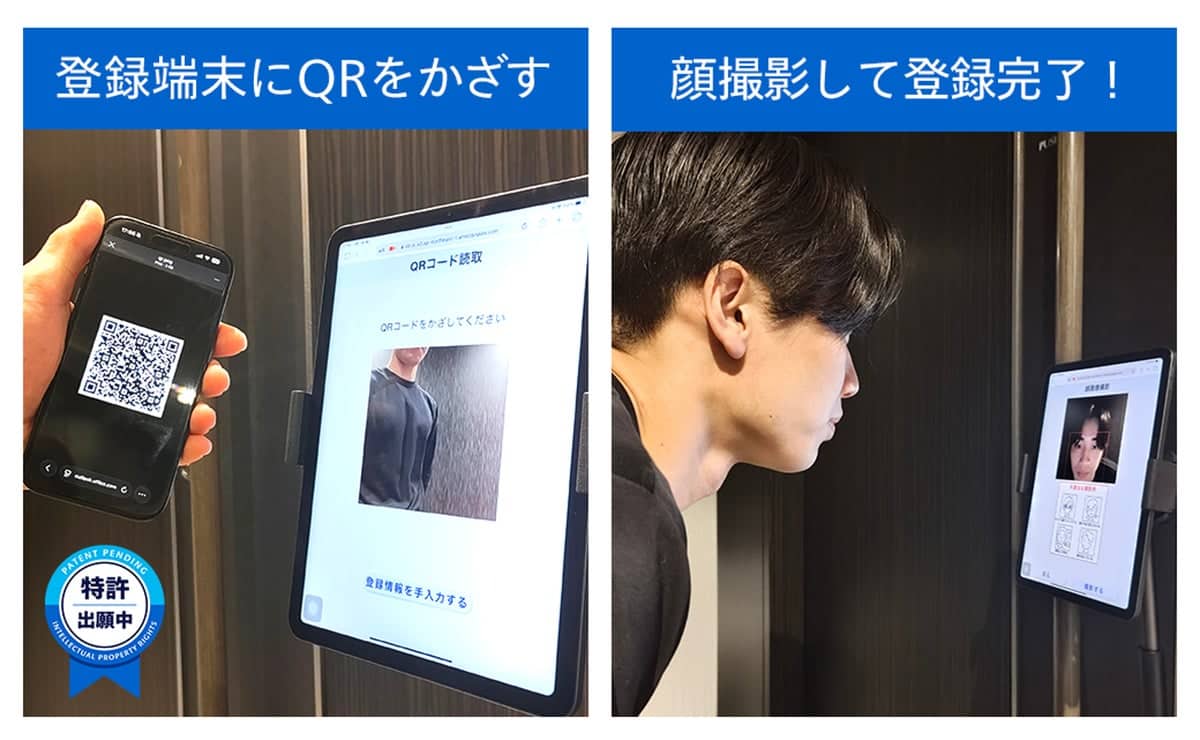
Panasonic Connect has introduced a new QR‑based face registration feature for its KPAS Cloud access management service. The new feature is aimed at streamlining biometric onboarding at factories, construction sites and other high‑traffic facilities.
In 2025 the Japanese company launched the KPAS Cloud Site Management Service. It uses Panasonic’s facial recognition technology to control entry and exit for contractors, staff and visitors.
The company says the new QR code feature is designed to remove one of the biggest operational bottlenecks as administrators previously had to collect face images in advance or register users on site.
Under the updated workflow, administrators generate a QR code from the management portal and send it to the user by email. On arrival the user scans the QR code at a dedicated terminal and captures their facial image. They then complete registration and gain access to authorized areas.
Panasonic says the QR codes contain restricted identification data that can only be interpreted in authorized environments. This prevents third‑party access and the mechanism is now under patent application, the company said in a post on its website (in Japanese and machine translated into English).
The update is part of a broader plan to expand KPAS Cloud into a unified platform for on‑site operations, according to Panasonic. Future additions will include facial recognition‑based attendance management, door‑level access control and integration with security camera video feeds.
Panasonic says the goal is to consolidate functions that are currently handled by separate systems and provide a more comprehensive digital identity and access management for industrial and logistics environments.
From Pakistan to the U.S. and the Philippines, QR codes are linking up with identity verification. In the U.S., CMS is aiming to modernize patient data access with patients able to take a QR code to the doctor to transfer private and personal details. In the Philippines, a digital civil registration service with QR code verification and face biometrics matching is under way.
Revisiting the Advent of the Abstract
Barry Schwabsky

A recent gallery exhibition on abstract art and self-taught artists proposes a new story for the rise of abstraction.
The post Revisiting the Advent of the Abstract appeared first on The Nation.
Palantir’s Manifesto Promises a Dystopian Future
Elizabeth Spiers

The tech company’s CEO Alex Karp delivers a self-serving broadside that’s steeped in oligarchic hubris and authoritarian nihilism
The post Palantir’s Manifesto Promises a Dystopian Future appeared first on The Nation.
Switzerland opens Swiyu bug bounty program to public

Switzerland has opened the bug bounty program for its upcoming digital identity wallet Swiyu to the public.
The bug bounty program has been run since July 2025 by the Federal Office for Cyber Security (BACS) in collaboration with security testing platform Bug Bounty Switzerland. Until now, the program has been run in private mode, meaning that only selected hackers could participate.
So far, 12 vulnerabilities have been identified, with results published on GitHub each quarter.
By opening the program to other hackers, the Swiss government wants to strengthen trust in the e-ID and the Swiyu trust infrastructure, according to its announcement.
The main focus areas for the testing include the Swiyu Public Beta trust infrastructure with Android and iOS apps, generic components and registries, as well as the implementation of open standards such as Verifiable Credentials, Decentralized Identifiers and OpenID for the issuance and verification of digital credentials. Applications are available at this link.
The Swiyu app is already available to citizens as a beta version, with plans to become a full-scale testing environment later in the year. The digital ID wallet stores users’ national eIDs while allowing them to control their data.
The technical implementation plan was formed in 2024 by the Swiss government, which has allocated 100 million francs (US$113.3 million) for the project.


